Can We Really “Print” Organs in the Future?
In the past decade, regenerative medicine has evolved from a distant scientific dream into one of the most promising frontiers in biotechnology. Among its most astonishing innovations is 3D bioprinting — a technology that could one day allow scientists to “print” functional human organs on demand. With global organ shortages continuing to cost countless lives every year, the prospect of bioprinted organs offers a vision of a future where no patient dies waiting for a transplant.
The Science Behind Organ Printing:
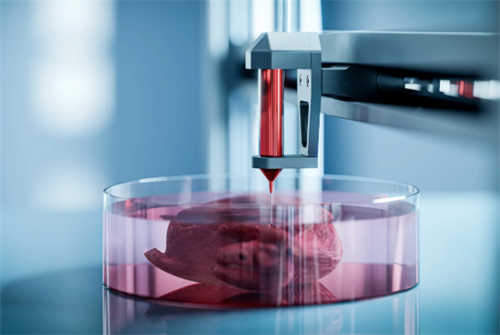
3D bioprinting applies the same principles as traditional 3D printing — layer-by-layer fabrication — but replaces plastic or metal with bioinks, materials made from living cells, growth factors, and biomaterials that mimic the natural environment of human tissue. Using digital models derived from medical scans, specialized bioprinters can construct complex, three-dimensional biological structures that resemble real tissues.
The process begins by creating a detailed blueprint of the organ, including its microscopic architecture and blood vessel networks. Then, layer by layer, the printer deposits cell-laden bioinks to build a structure that can sustain itself. Once printed, the tissue is incubated under controlled conditions, allowing the cells to grow, organize, and eventually form functioning tissue.
So far, scientists have successfully bioprinted simple tissues such as skin, cartilage, and corneal tissue, and are making progress toward more complex structures like livers, kidneys, and hearts. However, the leap from printing tissues to printing fully functional, transplantable organs remains a monumental scientific and engineering challenge.
The Barriers Ahead:
Despite remarkable progress, several critical hurdles stand in the way of widespread clinical application. One of the greatest challenges lies in vascularization — the creation of a functional network of blood vessels within printed tissues. Without an adequate blood supply, larger tissues cannot receive enough oxygen and nutrients to survive after transplantation.
Another major obstacle is cell sourcing. While stem cells offer a renewable and versatile cell supply, ensuring that they differentiate correctly into specialized cells (like heart or liver cells) and organize in the right pattern is extremely complex. Moreover, scaling up production while maintaining cell viability and function is an ongoing technical hurdle.
There are also biomechanical and immunological challenges. Printed tissues must not only look like real organs but also perform as they do under the body’s physiological pressures. Even if an organ is successfully printed, it must integrate seamlessly into the recipient’s body without rejection or malfunction.
Promising Advances:
Yet, progress continues to accelerate. Researchers at several leading institutions have recently demonstrated 3D-printed miniature organs, or “organoids,” capable of mimicking certain biological functions. For example, mini-livers can now process drugs and toxins in laboratory settings, making them useful for pharmaceutical testing. Similarly, bioengineered heart patches have been used to repair damaged cardiac tissue in animal studies, showing early signs of restoring function.
Advances in biomaterials have also been transformative. Modern bioinks are increasingly sophisticated, designed to degrade naturally as cells build their own support structures. Some are even engineered to respond to stimuli — such as temperature or pH — enhancing cell growth and organization. Meanwhile, AI and computational modeling are helping scientists predict how printed tissues will behave and optimize printing parameters for better outcomes.
Ethical and Regulatory Questions:
As with many emerging technologies, 3D bioprinting raises profound ethical and regulatory questions. Who will own the rights to bioprinted organs — the patient, the hospital, or the company that designed the blueprint? How should safety and quality be standardized when organs are printed individually for each patient?
Regulatory bodies like the U.S. Food and Drug Administration (FDA) and the European Medicines Agency (EMA) are now developing frameworks to evaluate bioprinted products, ensuring that they meet rigorous safety standards before being tested in humans. However, given the technology’s complexity, clear regulations and ethical guidelines are still catching up with the pace of innovation.
While fully printed human organs are not yet ready for clinical use, experts believe the first practical applications may arrive within the next decade. Partial organ scaffolds, tissue patches, and lab-grown organoids are already transforming drug discovery, toxicology testing, and disease modeling, reducing the need for animal experiments and accelerating new treatment development.
In the longer term, the convergence of stem cell biology, materials science, and bioengineering could make personalized organ fabrication a reality. Imagine a patient with liver failure receiving a new liver grown from their own cells — eliminating the risk of immune rejection and the dependence on donor organs.
Recommended for you: