The Rise of Medical Imaging AI: Can It Detect Cancer Earlier Than Human Doctors?
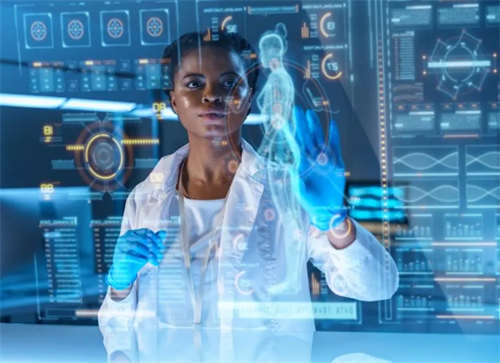
Medical imaging has long been at the forefront of cancer diagnosis. Radiologists examine X-rays, CT scans, and MRIs to detect subtle anomalies that could indicate malignancies. However, recent advances in artificial intelligence (AI) are transforming this landscape, raising questions about whether machines can outperform humans in detecting cancer at earlier stages.
How AI is Changing Medical Imaging?
AI systems, particularly those based on deep learning, are trained on vast datasets of medical images. These algorithms learn to recognize patterns that may escape even experienced radiologists, such as microcalcifications in mammograms or minute lung nodules in CT scans. By leveraging convolutional neural networks (CNNs) and other sophisticated architectures, AI can analyze thousands of images in minutes, offering unprecedented speed and consistency.
One of the key advantages of AI is its ability to quantify risk in a way that complements human judgment. For example, probabilistic models can assign a likelihood score to each detected lesion, helping doctors prioritize which findings require immediate attention. This combination of rapid processing and risk stratification has the potential to reduce missed diagnoses and false negatives, two critical challenges in cancer detection.
Clinical Evidence and Early Detection:
Several studies suggest that AI can detect certain cancers earlier than human radiologists. In breast cancer screening, for instance, AI algorithms have achieved sensitivity rates exceeding 90%, often identifying malignancies that were initially overlooked by clinicians. Similarly, in lung cancer detection, AI-assisted analysis of CT scans has shown the ability to flag suspicious nodules smaller than 5 millimeters—nodules that are easily missed during routine reviews.
Despite these promising results, AI is not infallible. False positives remain a concern, and reliance on AI without clinical oversight could lead to unnecessary biopsies and patient anxiety. Therefore, most experts advocate for AI as a complementary tool rather than a replacement for human expertise.
Integrating AI Into Clinical Practice:
The integration of AI into hospitals and clinics is gaining momentum, but it faces practical challenges. Data privacy, standardization of imaging formats, and regulatory approval are among the major hurdles. Moreover, AI models must be trained on diverse datasets to ensure accuracy across different populations and imaging equipment.
To address these challenges, some institutions are adopting hybrid workflows. In such systems, AI performs an initial screening of medical images, highlighting potential areas of concern for radiologists to review. This collaborative approach can improve efficiency while maintaining the critical role of human judgment in diagnosis.
Ethical and Regulatory Considerations:
The rise of AI in medical imaging also raises ethical questions. Patient consent, transparency in AI decision-making, and the potential for algorithmic bias are pressing concerns. Regulators in the United States, Europe, and Asia are actively developing frameworks to ensure that AI tools meet rigorous safety and efficacy standards before widespread clinical deployment.
Furthermore, continuous monitoring and post-market surveillance are essential to track AI performance over time. Unlike traditional medical devices, AI algorithms can evolve with retraining, which requires ongoing oversight to prevent drift and maintain diagnostic reliability.
Medical imaging AI is poised to redefine early cancer detection. By combining the computational power of AI with the clinical insight of radiologists, healthcare systems may detect cancers sooner, improve patient outcomes, and reduce diagnostic errors.
While machines may one day detect cancer earlier than humans, the most effective approach will likely be a partnership—where AI amplifies human expertise rather than replaces it. The future of cancer diagnosis is not about choosing between human and artificial intelligence, but about harnessing both to save lives.